
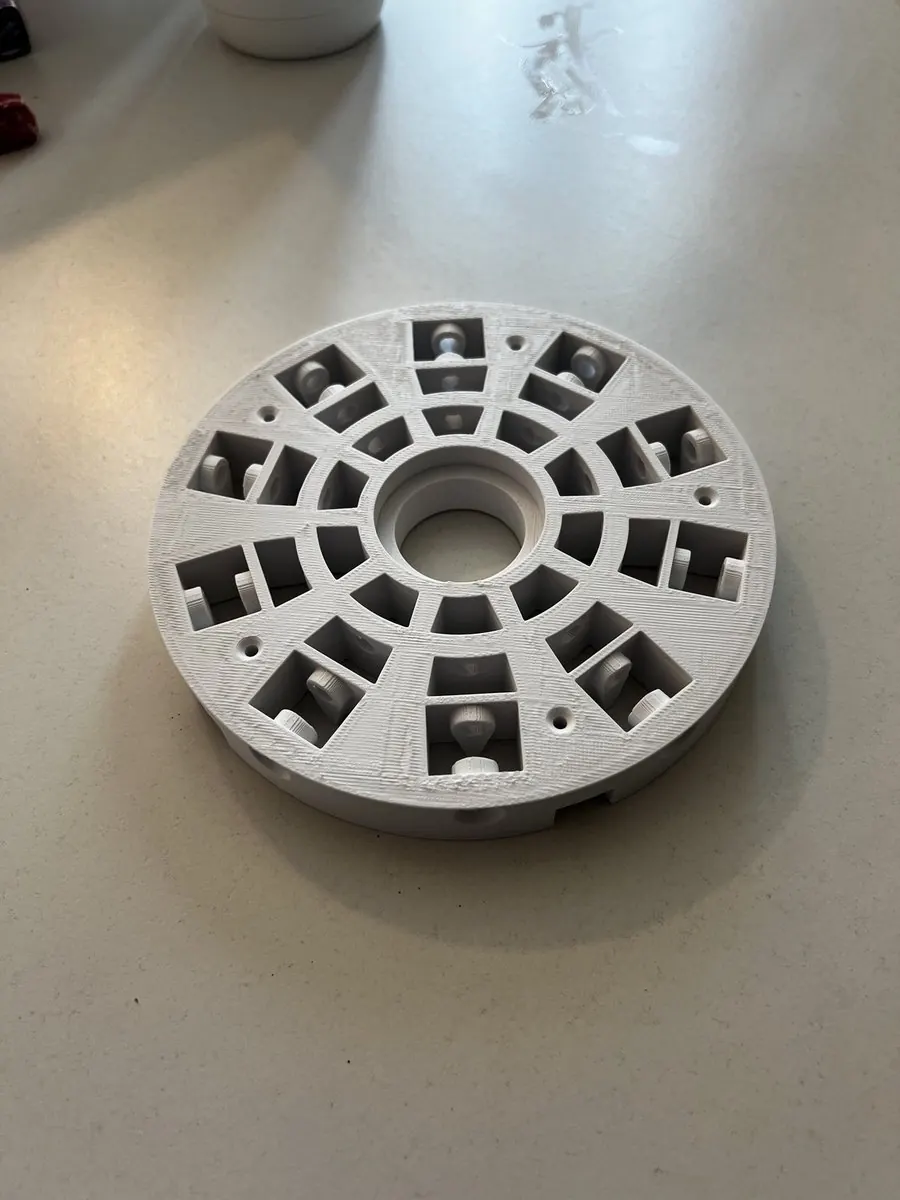
3D-Printed Custom Car Parts for Discontinued Models: Breathing New Life Into Automotive Ghosts

You know that sinking feeling. You’re scrolling through a forum at 2 AM, looking for a simple plastic clip for your 1992 Mazda RX-7. The part number is etched into your brain. You’ve checked eBay, junkyards, and three different “specialist” sites. Nothing. The part is discontinued. Your car is essentially a ghost — loved, but unsupported.
But here’s the thing: ghosts can be resurrected. And the tool for the job? A 3D printer. Honestly, it’s not sci-fi anymore. It’s a garage reality. Let’s talk about how 3D-printed custom car parts are saving discontinued models — one layer at a time.
Why Discontinued Parts Are a Nightmare (and a Goldmine)
Car manufacturers don’t make parts forever. It’s a simple economic fact. Tooling molds cost tens of thousands of dollars. Warehousing inventory? Another expense. So when a model’s production run ends, the parts pipeline eventually dries up. For popular classics like the E30 BMW or the Toyota Supra Mk4, aftermarket support helps. But for oddballs — say, a 1989 Saab 900 SPG or a first-gen Honda Insight — you’re often stranded.
That’s where 3D printing steps in. It flips the script. Instead of needing a massive factory run, you can print a single part. One-off. On demand. It’s like having a digital spare parts warehouse in your pocket.
The Magic of Additive Manufacturing for Cars
3D printing, or additive manufacturing, builds objects layer by layer from a digital file. For car parts, the most common materials are PLA (good for prototypes), PETG (tougher, UV-resistant), and ABS (similar to factory plastics). Nylon and carbon-fiber blends are also gaining traction for structural bits.
Here’s the deal: you don’t need a $50,000 industrial printer. A decent desktop unit — like a Prusa or a Bambu Lab — can handle interior trim pieces, vent louvers, button caps, and even some under-hood brackets. Sure, you won’t print a crankshaft (yet), but for the stuff that breaks and drives you crazy? It’s perfect.
What Parts Can You Actually Print?
Let’s get specific. Here’s a list of common discontinued parts that people are successfully printing right now:
- Dashboard clips and trim retainers — those little plastic bastards that snap off.
- Center console lids and hinges — the ones that sag or crack.
- Cupholder inserts — because your 1990s car didn’t come with any.
- Side mirror mounting brackets — especially for Japanese domestic market cars.
- Air vent directional vanes — the ones that get brittle and fall out.
- Sun visor clips — always breaking, always impossible to find.
- Engine cover clips and oil cap handles — simple but vital.
- Custom gauge pods and bezels — for aftermarket gauges.
And that’s just scratching the surface. People are printing entire door panels for rare Italian sports cars. It’s wild.
The Process: From Broken Clip to Printed Part
So how does it actually work? Well, you’ve got a few paths. Let’s break ’em down.
Path 1: The Digital File Hunt
First, check sites like Thingiverse, Printables, or Cults3D. Enthusiast communities often share STL files for common parts. For example, the BMW E30 community has files for everything from glovebox latches to window switch panels. You download, slice, and print. It’s that simple.
Path 2: The DIY Scan-and-Print
If you’ve got the broken piece (even in pieces), you can scan it. A cheap 3D scanner like the Creality Ferret or even a photogrammetry app on your phone can create a mesh. Then you clean it up in software like Blender or Fusion 360. It takes some learning, but it’s incredibly satisfying.
Path 3: The “I’ll Design It From Scratch” Approach
No original part? No problem. If you have the dimensions, you can model it in CAD. I’ve seen guys design custom intake elbows for old Volvos using calipers and YouTube tutorials. It’s not as hard as it looks — honestly, it’s like digital LEGO once you get the hang of it.
Material Matters: What Should You Use?
Not all plastics are created equal. Here’s a quick table to help you choose:
| Material | Best For | Pros | Cons |
|---|---|---|---|
| PLA | Prototypes, non-structural trim | Easy to print, cheap | Brittle, melts in heat |
| PETG | Interior parts, vent louvers | Tough, UV resistant | Can string, needs drying |
| ABS | Engine bay clips, brackets | Heat resistant, strong | Needs enclosure, fumes |
| Nylon (PA) | Hinges, structural mounts | Extremely durable | Hard to print, hygroscopic |
| Carbon-fiber blend | Custom braces, lightweight parts | Stiff, looks cool | Expensive, abrasive |
For most interior parts, PETG is the sweet spot. It’s forgiving to print and won’t warp in a hot car. For engine bay stuff? Go with ABS or nylon — but you’ll need a printer with an enclosure.
Real-World Success Stories (That’ll Make You Smile)
I talked to a guy named Marco who owns a 1997 Fiat Barchetta. The soft-top latch mechanism broke. Fiat doesn’t make it anymore. He spent six months searching. Finally, he modeled it in Tinkercad, printed it in PETG, and it’s been holding for two years. “It’s not perfect,” he said, “but it’s my part.”
Then there’s the story of a Porsche 944 owner who printed a replacement for the infamous “cracked dashboard” trim piece. The factory part costs $400 used. His print? About $3 in filament and four hours of time. That’s not just cost savings — that’s freedom.
Challenges You Should Know About (No Sugarcoating)
Look, I’m not gonna pretend it’s all sunshine. 3D printing car parts has real limitations. Layer adhesion can be a weak point. A part printed in PLA left in a Phoenix summer will turn into a puddle. And if you need exact tolerances — like for a window regulator gear — you might struggle with shrinkage.
Also, there’s the learning curve. Slicer settings, bed leveling, filament drying… it’s a rabbit hole. But honestly? It’s a fun rabbit hole. And the payoff is huge.
Where to Find Files and Communities
You’re not alone in this. There are thriving communities online. Check out:
- Reddit — r/3Dprinting and r/functionalprint are goldmines. Search your car model.
- Thingiverse — old-school, but packed with car-specific files.
- GrabCAD — more engineering-focused, great for precise models.
- Facebook Groups — e.g., “3D Printed Car Parts” or model-specific groups.
- Youtube — channels like “3D Printing Nerd” or “CNC Kitchen” have car repair episodes.
Pro tip: search for your car’s chassis code (e.g., “E30 clip STL”) before the model name. It’s more precise.
The Future: Print-on-Demand for Classics
We’re already seeing companies like PrintParts and Xometry offer on-demand printing for automotive restorations. Some shops are scanning entire interiors of rare cars — like the Lancia Delta Integrale — and creating digital libraries. Imagine a future where you just type in your VIN and download a part file. That’s coming.
And with materials advancing — think flexible TPU for gaskets, or high-temp PEEK for engine components — the line between printed and OEM is blurring. Fast.
One Last Thing…
There’s something deeply satisfying about holding a part you made yourself. It’s not just about saving money or keeping a car on the road. It’s about defiance. You’re telling the manufacturer, “I don’t need your obsolete parts catalog. I have a printer.”
So if you’ve got a broken clip, a cracked vent, or a missing button on your beloved but forgotten car… don’t give up. Fire up the printer. Measure twice. Print once. And drive that ghost.

More Stories
Autonomous Vehicle Cybersecurity for Personal Data: The Silent Lock on Your Digital Wheels
You know that feeling when you're riding in a self-driving car? It's like a quiet, glass bubble gliding through traffic....
Your Car and Your Home Are Talking. Here’s What They’re Saying.
Honestly, it’s not science fiction anymore. That seamless future where your car and your house work in concert? It’s already...
Comprehensive Analysis of Right-to-Repair Laws and DIY Maintenance for Modern EVs
Let's be honest: the relationship between car owners and their mechanics has always been a bit... intimate. You trust them...
The Culture and Mechanics of Professional Vehicle Wrapping and Vinyl Graphics
You see them every day. A fleet of pristine white vans transformed into rolling murals for a local plumbing hero....
The Ethics and Logistics of End-of-Life Vehicle Recycling and Part Harvesting
Picture a car at the end of its road. Maybe it’s a rusted sedan in a field, or a crumpled...
The Hidden Garage: Unpacking the Booming Secondary Market for Automotive Software Upgrades
Think about the last time you bought a smartphone. Sure, the hardware matters—the screen, the camera. But what truly unlocks...