
The Culture and Mechanics of Professional Vehicle Wrapping and Vinyl Graphics

You see them every day. A fleet of pristine white vans transformed into rolling murals for a local plumbing hero. A sleek sports car wearing a matte black second skin. A food truck that’s basically a giant, delicious billboard. Vehicle wraps are everywhere now, and honestly, they’ve moved far beyond simple stickers on a car door.
But what’s really going on here? There’s a whole world—a culture, really—behind these mobile masterpieces. It’s a blend of art, engineering, and flat-out hustle. Let’s peel back the corner (carefully, with a squeegee) and look at the culture and precise mechanics that make professional vehicle wrapping such a fascinating craft.
More Than a Job: The Wrapper’s Mindset
First off, the culture. Professional installers aren’t just technicians; they’re a unique breed. The best ones possess a wild mix of traits. You need the patience of a watchmaker and the problem-solving skills of an engineer. But you also need an artist’s eye for color, line, and flow. It’s a tactile, hands-on profession where a single piece of vinyl worth thousands of dollars can be ruined by a moment of distraction or a rogue piece of dust.
There’s a shared language, too. Talk about “knifeless tape,” “post-heating,” or a “dry stretch,” and you’ll get knowing nods. It’s a community built on forums, Instagram reels of satisfying installations, and a genuine pride in conquering a “difficult” panel—think old Volkswagen bugs with their complex curves. The culture values clean seams, invisible overlaps, and the holy grail: a wrap that looks like it was sprayed on.
The Vinyl Underground: A Community of Problem-Solvers
Online, this culture thrives. Installers swap tips on tackling tricky body lines on new Tesla models or the best method for wrapping textured plastic trim. They geek out over the latest cast vinyl films from 3M, Avery Dennison, or Oracal. There’s a constant, collective push against the “cheap and fast” operators, because they know a botched wrap hurts the entire industry’s reputation. It’s a culture of craftsmanship, often hidden in unassuming industrial units, that literally changes the landscape of our streets.
The Nuts and Bolts: The Mechanics of a Flawless Wrap
Okay, so how does it actually work? The mechanics of a professional vehicle wrap are a meticulous, multi-stage process. It’s not magic, but when done right, it sure feels like it.
Stage 1: The Digital Blueprint & Material Science
It all starts in the digital realm. Using specialized software, designers create templates and graphics that must account for door handles, fuel flaps, curves, and rivets. This isn’t just a flat image slapped on. It’s engineered. Then comes the material choice, which is critical:
| Film Type | Key Characteristics | Best For |
| Cast Vinyl | Thin, conformable, durable (5-7+ years). The professional’s choice. | Long-term vehicle wraps, complex curves, luxury finishes. |
| Calendered Vinyl | Thicker, less conformable, shorter lifespan. More economical. | Short-term promotions, flat surfaces, decals. |
| Color Change Film | Solid colors, matte, satin, gloss, or exotic finishes. | Full vehicle color changes, aesthetic customization. |
| Printed Graphic Film | Cast vinyl used as a canvas for digital printing. | Business graphics, detailed artwork, photographic imagery. |
Stage 2: The Make-or-Break Prep
Here’s a universal truth in wrapping culture: prep is everything. A panel must be surgically clean. This involves:
- A thorough decontamination wash.
- Clay bar treatment to remove embedded contaminants.
- Wiping down with isopropyl alcohol to eliminate every trace of wax or grease.
Any speck left behind becomes a visible bubble under the vinyl—a permanent flaw. It’s tedious, unglamorous work, but it’s the absolute foundation of quality.
Stage 3: The Installation Dance
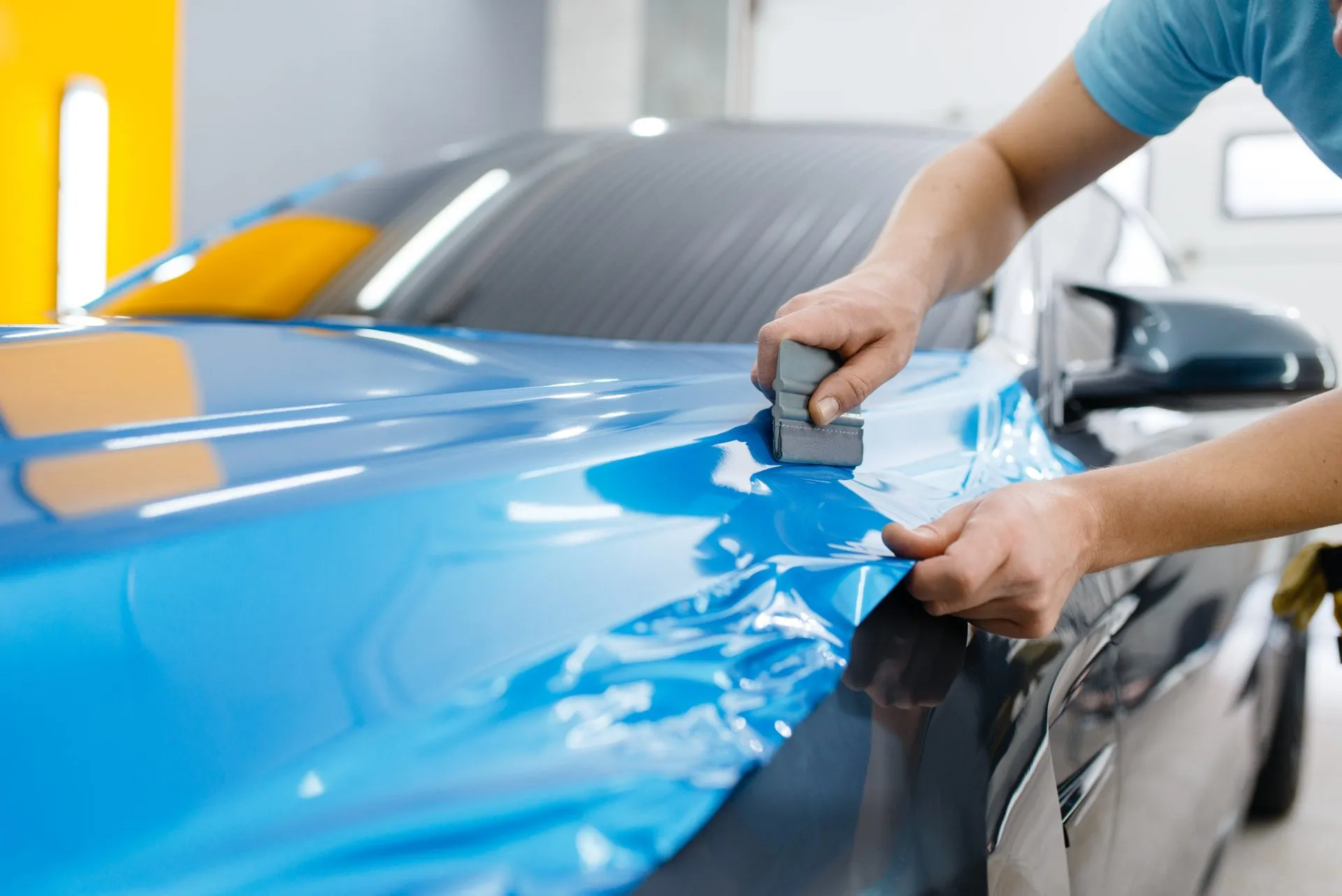
This is where the art meets the science. The installer uses a slip solution (soapy water) to allow the vinyl to be positioned on the vehicle. Then, with heat guns, squeegees, and their own trained fingertips, they work the material. They stretch it just enough—too much and it’ll shrink back or fail prematurely—to conform over compound curves and into recesses.
They use knifeless tape to create perfect, cut-free seams. They “post-heat” seams and edges to activate the adhesive and ensure a permanent bond. It’s a physical, focused process. A full vehicle wrap can take a skilled team anywhere from one to three days, depending on complexity.
Why Businesses and Enthusiasts Keep Coming Back
The mechanics enable the value. For businesses, a professional fleet branding wrap is a no-brainer. It turns idle assets into mobile advertising spaces. The cost-per-impression is incredibly low. For car enthusiasts, it’s about personalization and protection. A paint protection film (PPF) or a color change preserves the factory paint while expressing individuality. The key, always, is going professional. A DIY wrap kit might save money upfront, but the result is often a wrinkled, misaligned mess that’s a nightmare to remove.
The Future: Where Culture and Mechanics Are Headed
The industry isn’t standing still. The culture is buzzing about new textures, chrome finishes that are actually wrap-able, and films that change color with temperature or viewing angle. Mechanics are adapting to new vehicle substrates—more plastics, more unusual textures. Sustainability is becoming a talking point, with manufacturers developing more recyclable vinyl films.
And perhaps the biggest shift? Perception. A vehicle wrap is no longer seen as a cheap alternative to a paint job. In many cases, it’s the superior choice. It’s temporary, protective, and offers creative possibilities paint simply can’t match.
So next time you pull up next to a brilliantly wrapped truck at a light, look closer. You’re not just seeing an ad or a cool color. You’re seeing the product of a dedicated craft. A blend of community knowledge, obsessive preparation, and a steady hand applying technology that’s just a few thousandths of an inch thick. It’s a reminder that even in our digital age, the most impactful canvases are often the ones rolling right by us.


More Stories
3D-Printed Custom Car Parts for Discontinued Models: Breathing New Life Into Automotive Ghosts
You know that sinking feeling. You're scrolling through a forum at 2 AM, looking for a simple plastic clip for...
Autonomous Vehicle Cybersecurity for Personal Data: The Silent Lock on Your Digital Wheels
You know that feeling when you're riding in a self-driving car? It's like a quiet, glass bubble gliding through traffic....
Your Car and Your Home Are Talking. Here’s What They’re Saying.
Honestly, it’s not science fiction anymore. That seamless future where your car and your house work in concert? It’s already...
Comprehensive Analysis of Right-to-Repair Laws and DIY Maintenance for Modern EVs
Let's be honest: the relationship between car owners and their mechanics has always been a bit... intimate. You trust them...
The Ethics and Logistics of End-of-Life Vehicle Recycling and Part Harvesting
Picture a car at the end of its road. Maybe it’s a rusted sedan in a field, or a crumpled...
The Hidden Garage: Unpacking the Booming Secondary Market for Automotive Software Upgrades
Think about the last time you bought a smartphone. Sure, the hardware matters—the screen, the camera. But what truly unlocks...